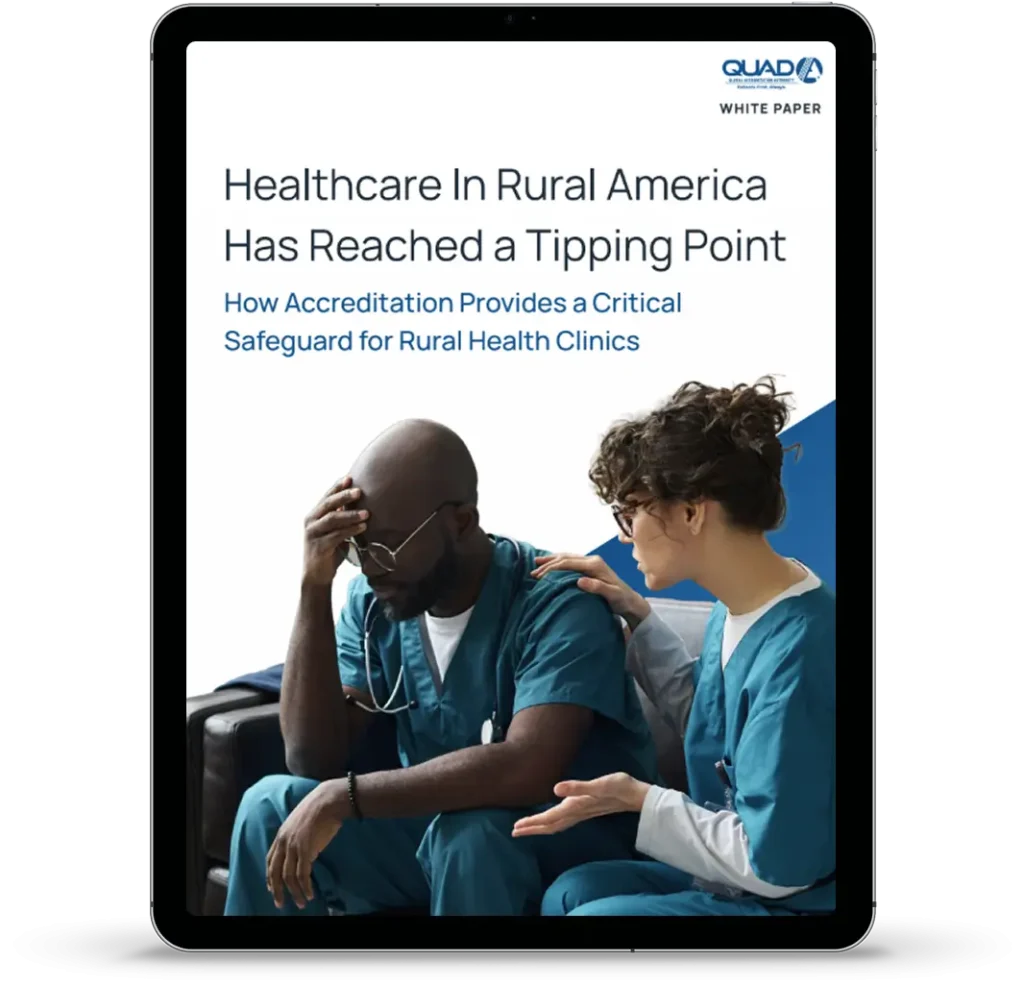
Healthcare In Rural America Has Reached a Tipping Point
Through the process of accreditation, RHCs can raise their quality of care to better serve our nation’s most vulnerable populations.
How Accreditation Provides a Critical Safeguard for Rural Health Clinics
Rural health clinics are serving 37.7 million vulnerable patients each year, while facing closures, staffing shortages, and dangerous gaps in oversight.
This white paper explores the challenges faced by rural health clinics, common deficiencies discovered during regulatory surveys of RHCs, and how accreditation with QUAD A can help tip the scales toward better outcomes.
- Improve Everyday Operations: Accreditation with QUAD A reflects a commitment to continuous improvement, consistent practices, and patient safety as part of routine care.
- Adopt Industry-recognized Practices: QUAD A’s Rural Health Clinic (RHC) Accreditation program helps facilities adhere to high standards set by healthcare industry leaders.
- Maintain Consistent Oversight: RHCs that are accredited by QUAD A demonstrate compliance with best practices through onsite surveys and rigorous self-assessments.
Download the White Paper
The Risky State of RHC Oversite
Rural health clinics face challenges on both the local and federal levels, adding up to a lack of quality care and significant patient safety concerns. Through the process of accreditation, RHCs can overcome the risks of common concerns that affect many facilities.
Lapsed Oversight
Inconsistent Processes
Physician Shortages
Deficiencies in Patient Safety
RHC Accreditation: Improving the State of Rural Healthcare
QUAD A’s Rural Health Clinic (RHC) Accreditation program gives RHCs the support they need to work toward greater operational efficiency and stronger patient safety. See how.